
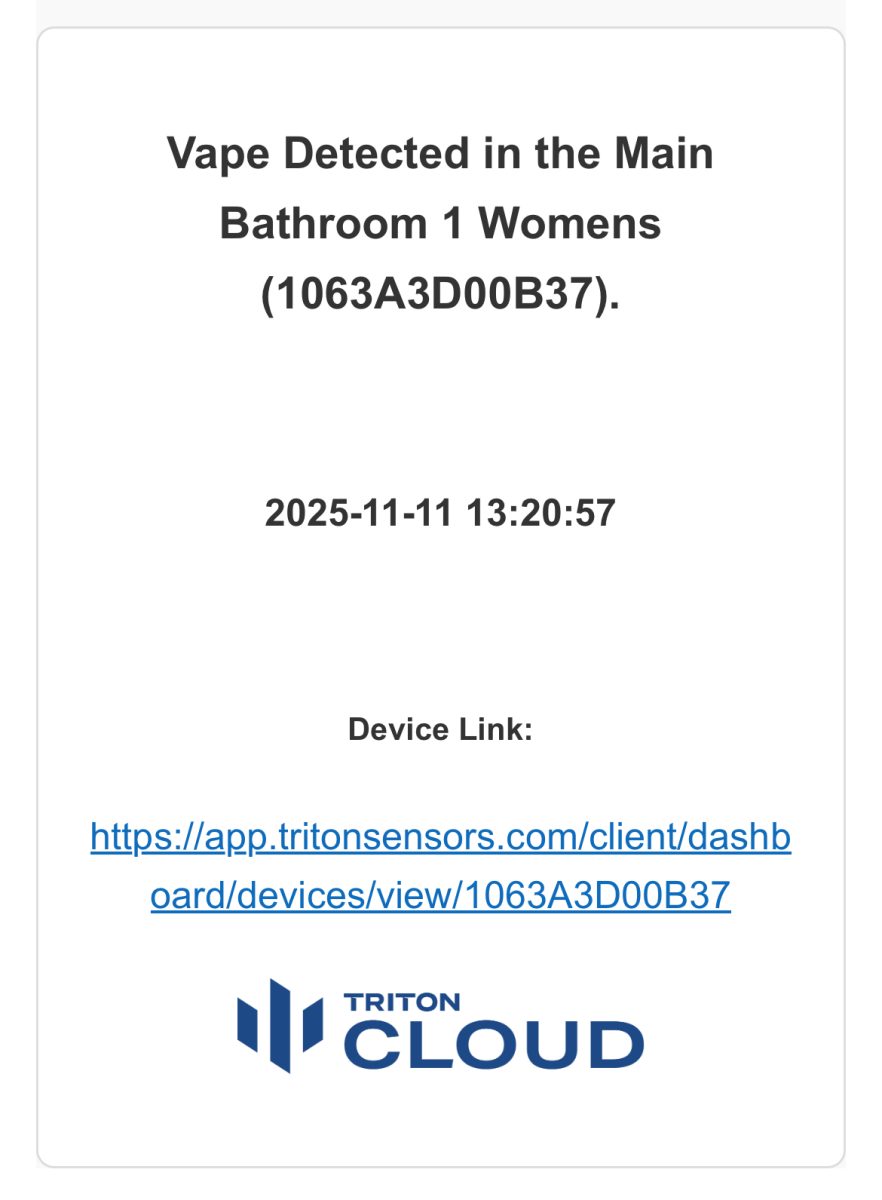
In April of 2024, Troy High School installed vape detectors in several bathrooms as an effort to reduce vaping on school grounds. The small white devices, which look similar to smoke alarms, can detect chemicals from e-cigarettes and alert administrators when triggered.
Assistant Principal Kerry Brennan says the decision came after staff noticed vaping becoming more common among students. “We decided to install the vape detectors not because of one incident, but because we have had instances of vaping, and we always want to do what we can to help students make better choices,” Brennan says. The detectors are meant to create a consistent and quicker way to respond when incidents happen.
Each device connects to an app that alerts the Shield safety team and administrative staff in real time. When one goes off, an available team member checks the restroom that sent the alert and reviews nearby hallway cameras to see who entered or exited around that time. “There are no cameras in the bathrooms. We always make sure to respect students’ privacy,” Brennan says.
Once an alert is confirmed, staff speaks with the students involved to determine what happened. If vaping is verified, the student is brought to one of the administrator’s offices. Brennan adds, “The goal is not to punish, but to help students make better choices.”
“Ultimately, we want all our students to be safe and healthy,” she says. “If you decide to vape at school, you should be held accountable, but it should always be a learning opportunity.”
While administrators describe the detectors as a safety measure, many students have mixed feelings about them. “They don’t really work,” Source 1 says. “People still vape in the bathrooms. Some even try to break them.”
The detectors have made some students more careful, but not enough to stop, according to Source 2: “Students do it anyway. They just find other bathrooms or locker rooms without them.”
Source 3 agrees that the detectors do not seem to stop vaping: “I’ve seen someone blow smoke right at one and nothing happened.” However, the full efficiency of the detectors is difficult for students to monitor as they do not emit a visible signal in the restroom when vape is detected.
Source 3 feels that the primary purpose of the detectors is to deter vaping, instead of punishing vaping: “It’s more just to scare people than actually do anything.”
Some students say they have been called down or searched after a detector went off. “They searched my bag, my pockets and my shoes,” Source 2 says. “They didn’t find anything, but it was random and uncomfortable.”
Brennan says the administration handles these situations carefully and respectfully. “We follow consistent procedures and make sure students are treated fairly,” she says. “We never want to embarrass them, but we also have to take the alerts seriously.”
When asked what could actually help students stop vaping, most students and admin agree that education and support would be more effective than punishment.
“Suspending someone for a few days doesn’t help,” Source 1 says. “If they really want people to stop, they should focus on showing how bad vaping is instead of trying to control it.”
Though vaping is a topic covered in-depth in the school’s required health program, Source 3 suggests that further education from experts can make a bigger difference. “If actual scientists came in and explained what vaping does to your lungs, it would probably have more of an impact than detectors,” says Source 3.
Brennan says the school shares that goal and connects students with resources such as Troy Youth Assistance for additional support. “We installed them to encourage students to make better decisions and to communicate the fact that we do not tolerate any substance abuse at Troy High.” she says. “At the same time, we want to offer meaningful help to anyone who needs it,” she adds.
Since the detectors were added, Brennan says most families have supported the decision: “Our families understand that we installed the vape detectors to help our students and make Troy High [School] as safe as possible.”
“Most students don’t mind the installation. If anything, they’re glad they can use the bathrooms without distractions,” says Brennan.
The added surveillance makes Source 3 uneasy. “I think they’re being a little bit too controlling,” Source 3 says.
The administration has not decided whether to expand the system to more restrooms, but Brennan says the school will continue to evaluate how well the detectors work and whether any updates are needed. “We may continue with the current vape detection system or look at other companies,” she says.
Although opinions differ, vaping remains a problem that will not be solved overnight. According to the Food and Drug Administration Youth Tobacco Survey, at least 7.9% of high schoolers reported current vape usage. “I think students vape for two main reasons: to look a certain way in front of their friends or to relieve stress,” Brennan says. “The best way to cut down is by helping them understand the risks and giving them real support.”